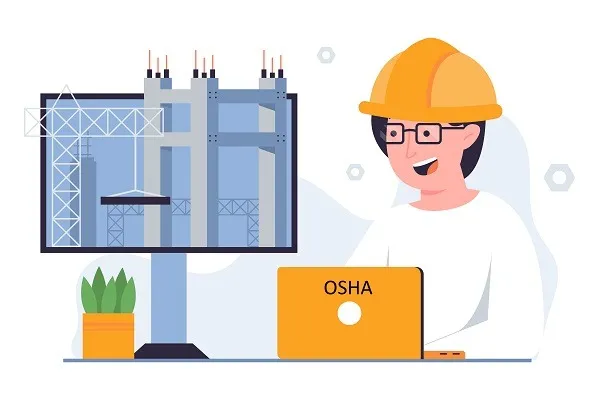
OSHA stands for Occupational Safety and Health Administration.
OSHA is the U.S. workplace safety agency responsible for setting and enforcing safety and health standards. It also provides guidance, education, outreach and training to help employers create safer workplaces and help workers understand their rights and responsibilities.
For employers, OSHA matters because workplace safety is not just a legal issue. It is also an operational issue. Clear safety rules, strong training and reliable records help reduce confusion, support compliance and improve day-to-day site control.
What is OSHA?
OSHA is the main U.S. federal agency focused on workplace safety and health.
Its role is to help make sure workers are protected through standards, inspections, education and enforcement. When people search for the meaning of OSHA, they are usually trying to understand what the agency does and why it appears in workplace training, policies, site rules and compliance documents.
What does OSHA do?
OSHA has several core functions.
It helps create workplace safety standards. It investigates complaints and serious incidents. It conducts inspections. It also provides educational resources and practical guidance for safer work practices.
In simple terms, OSHA helps employers understand what safe work should look like and helps workers understand the protections that apply to them.
That is why OSHA is often connected to:
- workplace safety training
- induction programs
- hazard awareness
- incident reporting
- compliance processes
- site-specific rules
Why is OSHA important for employers?
OSHA is important because safety expectations need to be clear, consistent and well communicated.
A business can have policies on paper, but that is not enough. Workers need to understand those policies before they start work. Contractors need to know the rules that apply on site. Managers need a reliable way to confirm that training has been delivered and acknowledged.
A strong workplace safety process helps businesses:
- reduce risk
- improve consistency
- support compliance
- keep training records organised
- communicate expectations clearly
- prepare workers before they begin work
This is where many businesses struggle. Safety information is often spread across emails, documents, verbal instructions and disconnected systems.
Who does OSHA apply to?
OSHA applies to many private-sector employers and workers in the United States.
Some public-sector coverage also exists through approved state plans. That means coverage can vary depending on the state, the employer and the type of work involved.
For practical business use, the main point is simple: if a business operates in the United States, workplace safety requirements should be taken seriously and training should be delivered in a way that is clear, organised and easy to track.
Is OSHA a law or an agency?
OSHA is an agency.
The law is the Occupational Safety and Health Act of 1970. The agency responsible for administering and enforcing that law is the Occupational Safety and Health Administration.
Many people use the word OSHA to refer to both the agency and the wider workplace safety framework. That is why this question is searched so often.
Does OSHA apply outside the United States?
No. OSHA is specific to the United States.
Other countries have their own workplace safety regulators, legal frameworks and compliance systems. Even so, many global businesses still search for OSHA because the term is widely recognised in safety training, contractor management and workplace compliance discussions.
OSHA and workplace onboarding
OSHA is closely linked to onboarding because safety rules need to be explained before work begins.
New employees need to understand site procedures, hazards, reporting rules and role-specific expectations. Contractors need to complete required inductions before they arrive. Managers need confidence that workers have received the right information and acknowledged it properly.
Without a structured process, safety onboarding can become inconsistent and difficult to manage.
How Induct For Work helps businesses manage safety onboarding
Induct For Work helps businesses manage onboarding, training and compliance records in one place.
Instead of relying on scattered documents, emails and manual follow-up, businesses can use Induct For Work to deliver safety information in a more organised and repeatable way.
With Induct For Work, businesses can:
- deliver safety induction content online
- explain site rules before work starts
- assign training by role or location
- collect acknowledgements and confirmations
- keep records in one place
- support more consistent onboarding across teams
This helps reduce missed steps and makes it easier to show that workers have received the information they need.
Why this matters for growing businesses
As businesses grow, safety communication becomes harder to manage manually.
More workers, more contractors and more sites usually mean more documents, more reminders and more room for error. A structured digital process helps businesses stay organised without making onboarding harder for the people who need to complete it.
That is where a platform like Induct For Work becomes valuable. It helps turn workplace safety expectations into a clear process that can be delivered, completed and recorded properly.
Conclusion
OSHA stands for Occupational Safety and Health Administration.
It is the U.S. agency responsible for workplace safety and health oversight. For businesses, OSHA matters because safety expectations must be communicated clearly, delivered consistently and supported by proper records.
The strongest approach is not only understanding what OSHA stands for. It is also making sure workplace safety training, induction and compliance processes are managed in a way that is practical, clear and easy to scale.
FAQ
OSHA stands for Occupational Safety and Health Administration.
OSHA is the U.S. workplace safety agency responsible for standards, enforcement, education and guidance related to worker safety and health.
OSHA is important because it affects how businesses communicate safety rules, train workers and manage workplace compliance.
No. OSHA is the agency. Workplace onboarding is the process businesses use to explain safety rules, procedures and expectations to workers.
Businesses can manage safety onboarding more effectively by using a structured system to deliver training, collect acknowledgements and keep records organised.
Start a free trial or book a demo to see how INDUCT FOR WORK LMS can support your workplace safety processes.
Author: Anna Milova
Published: 30/09/2023
Updated: 31/05/2026